

Geopolitical Tensions, Media Coverage, and Investor Outlook
How to respond when political risks increase.

Geopolitical tensions have risen sharply lately. The news is filled with reports of conflict, from the ongoing war in Ukraine (now in its fifth year) to fresh troubles in the Middle East. While the human cost of these crises is paramount, investors are wondering how such turmoil affects them and their portfolios.
Why This Matters to Investors
During turbulent periods it’s natural to lose sight of long‑term goals and become preoccupied with short‑term worries. Making sound investment decisions under stress is challenging, but understanding the data can help keep emotions in check.
What the Data Shows
A 2024 study titled “War Discourse and Disaster Premium: 160 Years of Evidence from the Stock Market” examined roughly 7 million New York Times articles spanning 1871‑2019. Researchers linked the intensity of war coverage each month to subsequent U.S. equity market returns and found:
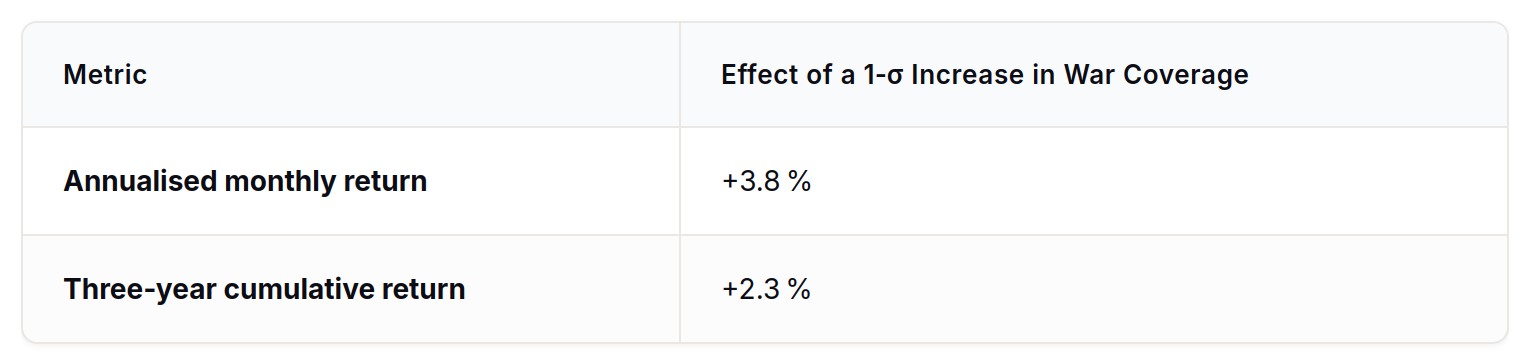
In plain English: when the press focuses more on war, the U.S. stock market tends to deliver higher returns over the following three years.
Why Might War Appear “Good” for Returns?
Investor Overreaction – Heightened war coverage often triggers fear‑driven selling, pushing prices down. Once the panic subsides, equities rebound, generating a premium.
Risk Compensation – Greater perceived risk raises the expected return investors demand, leading to higher future gains once the market stabilises.
Both mechanisms suggest that the observed “war premium” is driven more by market psychology than by any fundamental boost from conflict itself.
Should You Chase This Premium?
The study does not recommend buying stocks of nations directly involved in wars; it only examines overall U.S. market performance. Targeting specific conflict‑exposed countries could produce very different outcomes.
Cautionary Points
Emotions Can Cloud Judgment – During crises, people tend to overestimate worst‑case scenarios.
Premium Is a By‑Product, Not a Strategy – The “war return premium” emerges from collective over‑reaction, not from a predictable, exploitable pattern.
Focus on Risk Management – Rather than trying to capture the premium, aim to avoid paying it. Staying disciplined with a diversified, long‑term plan typically serves investors better.
Takeaway
Historical data shows that heightened war coverage has coincided with higher subsequent equity returns, but this effect stems from market psychology, not from the wars themselves. The safest approach is to stay grounded in your long‑term objectives, manage risk prudently, and avoid letting short‑term headlines dictate major portfolio moves.